Animal Welfare
An essential charter that allows farmers to validate good practices in this area.
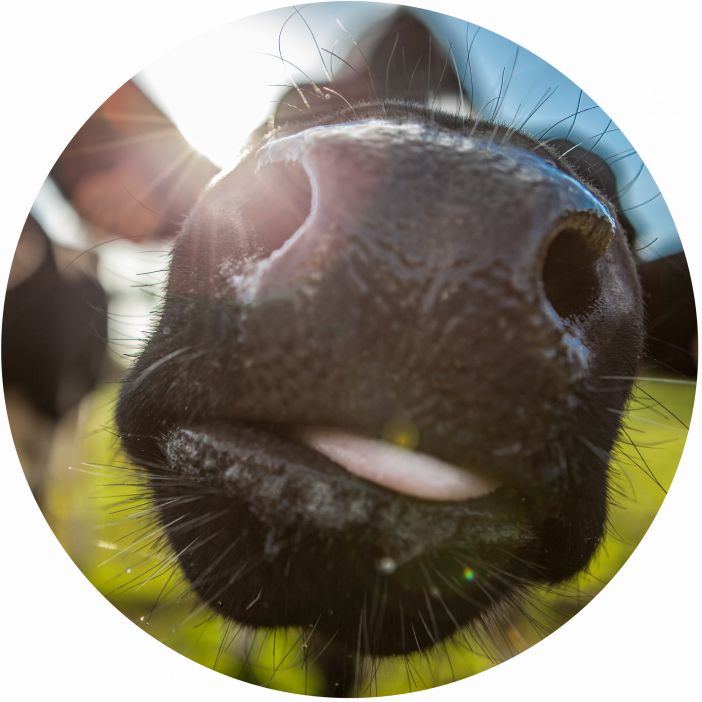

Animal Welfare
Since 2014, well before animal welfare was taken into account by the industry, LSDH partnered with an animal welfare NGO (a movement working to improve the living conditions of farm animals, without questioning animal farming itself) to develop a charter that allows farmers under contract with the dairy to validate good practices in this area and take part in a continuous improvement approach.
The first on-farm audits began with Monoprix, then expanded with Auchan’s responsible supply chain, and today take place as part of the “C’est qui le patron ?!” initiative.
Eventually, all of our initiatives will need to meet these specifications.
About ten criteria have been identified on farms, assessed annually:
- type of housing,
- the cows’ diet,
- access to pasture,
- veterinary monitoring of the herd,
- herd renewal
and more technical criteria:
- the lameness rate (number of cows that limp),
- mastitis rate (inflammation of the udder),
- the cows’ body condition *,
- the animals’ stress levels…
Depending on the score obtained, we discuss with the farmer any steps that may need to be taken as part of an ongoing improvement process. If the score deteriorates without an action plan being put in place, the farm may be excluded from the scheme, and the milk from those animals may no longer be collected and marketed under these various charters.
In addition to the annual monitoring carried out by our specialists, audits conducted by an external certification body validate, through sampling (10% per year), that the approach is robust.
Of course, there are different good-practice farming charters that are adapted depending on the species concerned.
* For body condition, cows must be in good physical shape, without deficiencies or excess — this corresponds to what we call our “body mass index”.