Opaque PET
Why opaque PET? Cow’s milk is an important source of riboflavin (vitamin B2), and this vitamin is highly light-sensitive, so the packaging must act as a barrier to light. PET, meanwhile, avoids the need for aluminium foil seals.
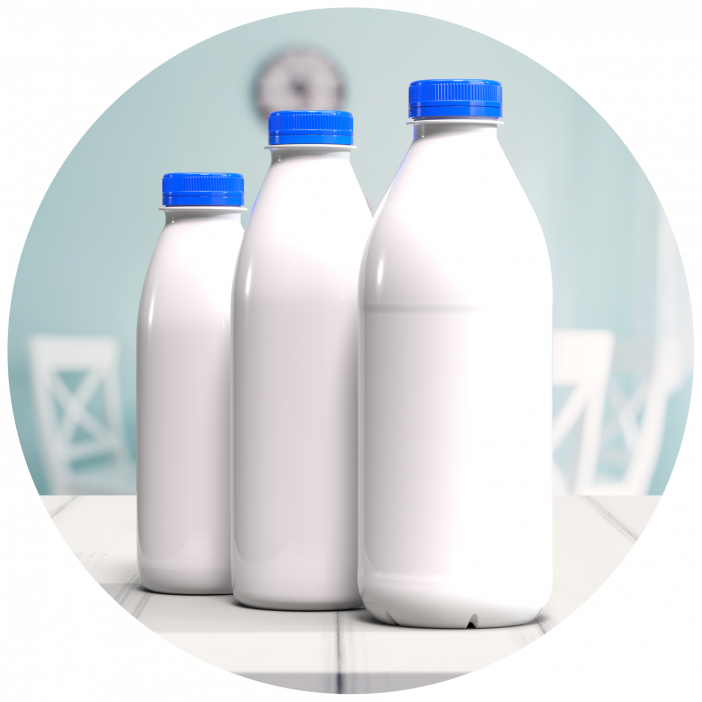
Opaque PET: an industry and new opportunities
Aware of its responsibility to bring to market packaging that respects the environment and fits seamlessly into recycling channels, LSDH has invested in a large-scale consortium of 8 major industry players, with the goal of creating a closed recycling loop.
How to Recycle Opaque PET
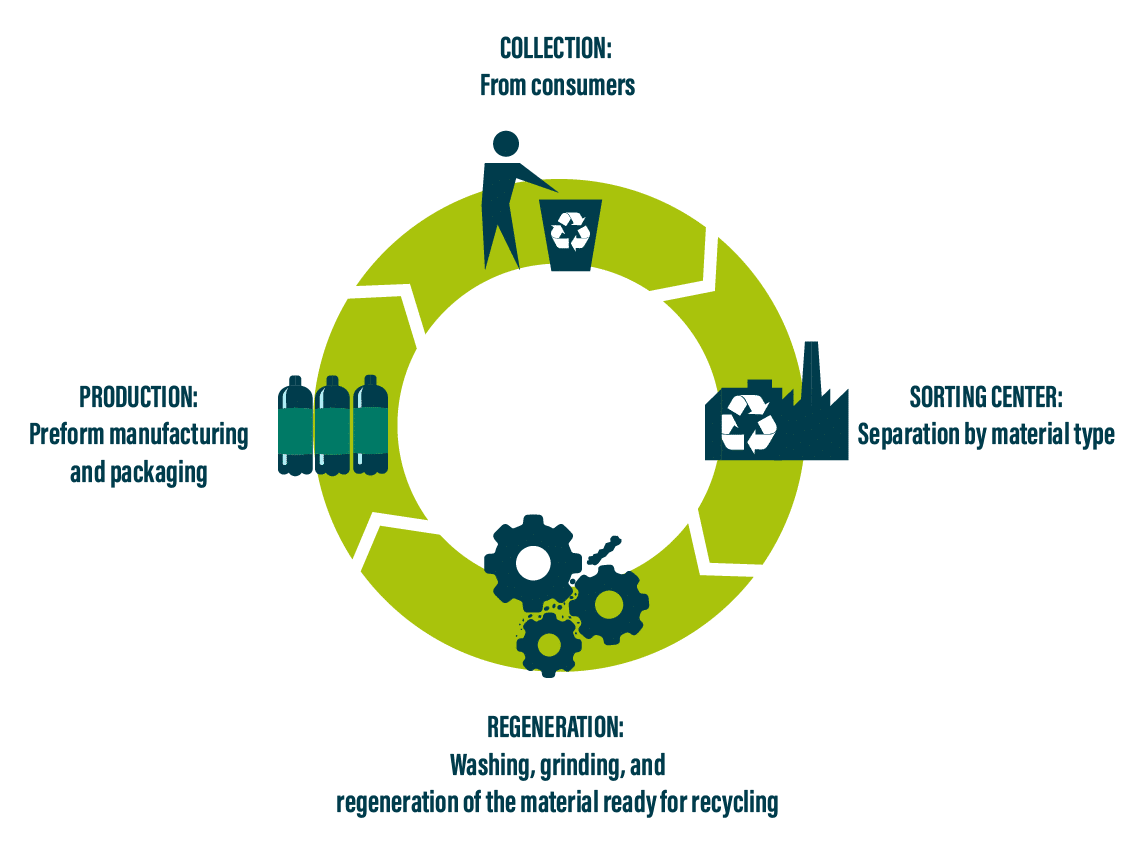

For the consortium members (Carrefour, CITEO, PDG Plastiques, Intermarché, La Laiterie de Saint-Père, Paprec Group, SGT (Société Générale des Techniques) and LSDH), this project is a genuine first — and a real achievement — in the dairy sector’s use of opaque PET.
The consortium has been working since 2017 along 3 main lines:
- Improving material properties to optimise their recycling within the current mainstream channel (technical fibre for building insulation)
- Developing a bottle that meets milk protection requirements while being completely different from current bottles
- Establishing a virtuous closed-loop recycling channel for food-grade use (bottle-to-bottle)
This consortium demonstrates our commitment to moving towards an ever more sustainable product, while also being a source of proposals and solutions.
LSDH’s recent decision to include a minimum of 30% recycled material in all its milk bottles from 2024 marks a major step forward, driving the industry from collection through to material regeneration. Supported by CITEO, this effort shows that mobilising recycling stakeholders can make circular use of opaque PET a reality — meeting the challenge of ending single-use plastic.